Industry Trends · 4 min read
Country EDM on Festival Stages: What Changed, What I See From the Road
Country EDM stopped being a novelty slot because it solves a programming problem.
The short version
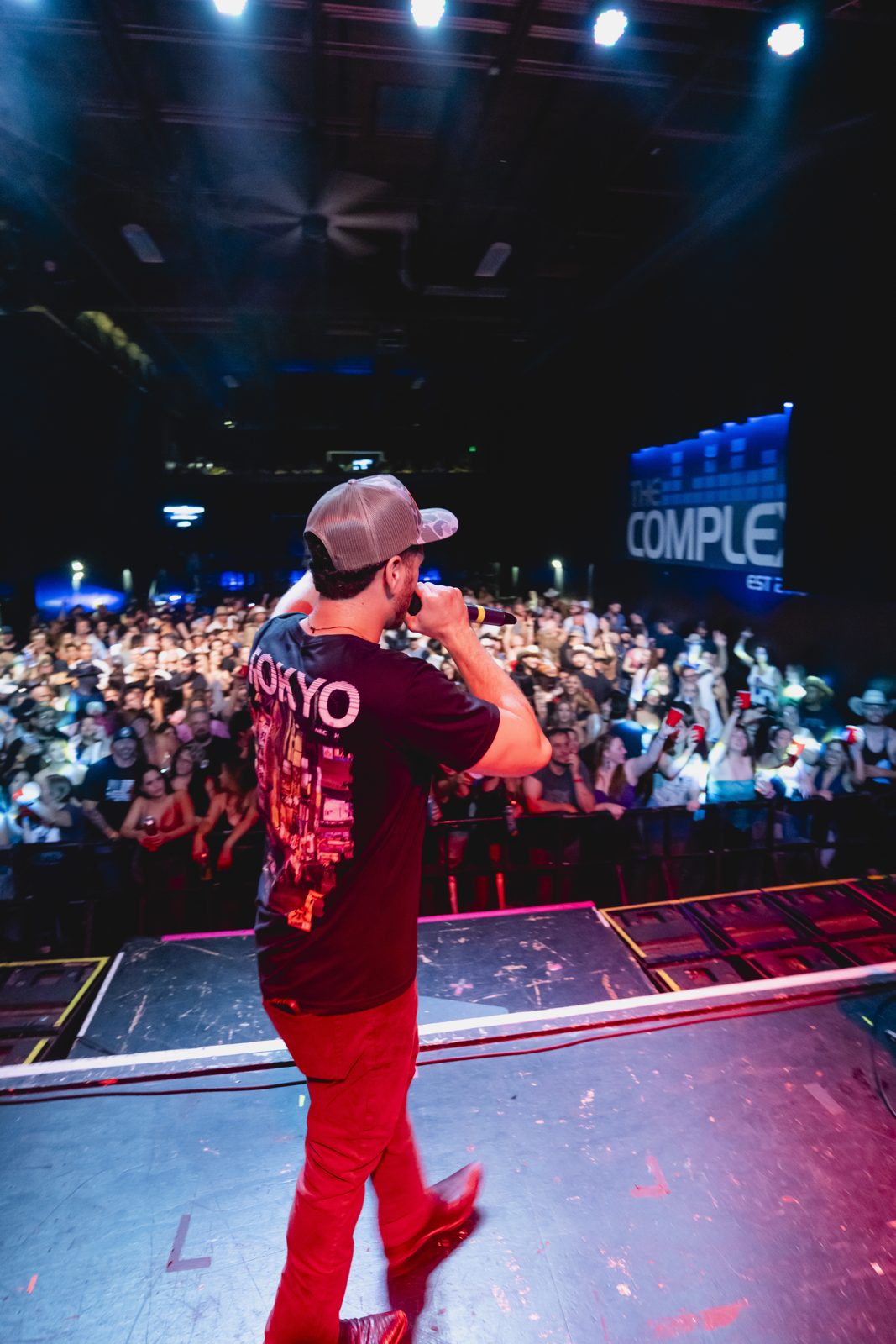
Country EDM has graduated to prime-time festival stages because a hybrid set holds both country and dance music fans in a single crowd. However, the physical production requirements on stage must adapt to accommodate the live instruments and technical complexities of a true hybrid show.
Short answer: Country EDM stopped being a novelty slot because it solves a programming problem. A hybrid set holds a country audience and a dance audience in the same field at the same time, which is exactly what a festival buyer wants at sunset. The sound got promoted before the production standards caught up, and that gap is the real story.
A note on sourcing: I am not going to tell you which artist is playing which festival next season. Plenty of blogs will, and most of it is guesswork. What follows is what I can actually speak to, from a 17-city tour in 2025 and a decade of watching this audience form.
What actually changed
Three things, in order.
Crowd behavior changed first. Country nightlife rooms started running late-night DJ hours, so a country audience learned how to be a dance audience. By the time festivals reacted, the crowd had already been trained. That sequence matters: this was audience-led, not industry-led.
Programming followed. Once a sound demonstrably holds a mixed crowd, it gets moved out of the tent and into a slot where the crowd size matters. Sunset slots are the tell. A festival does not give away a sunset slot to an experiment.
Production followed last, and unevenly. This is where the friction still is. A hybrid act has more in common with a band than with a DJ, and a lot of stages are still advancing these shows as if a laptop and two CDJs is the whole picture.
What a crossover crowd actually behaves like
The thing I did not expect: a country-leaning crowd gives you more patience and less margin. More patience because they will stand through a slower opening if the songs are real. Less margin because the second the set stops being about songs, they read it as a stranger playing to himself.
Practically, that means the front of a hybrid set has to earn something. I open closer to 100 BPM with material where the vocal is the point, and I do not touch a hard drop until the room has been walked up through the mid tempos. When I have jumped that curve, the floor thins out and the phones come up. Nobody boos. They just leave.
The tempo arc I actually use
- 95 to 105 BPM - acoustic, outlaw-leaning, vocal-forward. Credibility.
- 105 to 115 BPM - organic house drums under country vocals. First movement.
- 115 to 122 BPM - the shared classics everyone already knows, rebuilt with dance drums. Prime time.
- 122 to 128 BPM - full festival mode. Drops as payoff, not as introduction.
That arc is the whole trend in four lines. Everything else people write about this genre is decoration on top of it.
What changed technically on stage
The honest, unglamorous part of the shift.
- Input lists got longer. A hybrid set is not two channels. Adding live electric guitar over the set - what I do with Kristian in the Mixmode format - means a DI or amp mic, a wireless channel, and a monitor mix that a straight DJ booking never needed.
- Low end became a negotiation. Country records carry weight in the low mids. Dance records carry it lower. Stack them without EQ discipline and the vocal disappears in the 200 to 400 Hz range. Nearly every muddy hybrid set I have heard died there rather than in the sub.
- Changeovers got tighter. Festival changeovers do not expand because your act has a guitar in it. The rig has to land in the same window a DJ gets.
- Lighting programming changed. Warm, honky-tonk-leaning looks for the front of the set, full mainstage looks after the pivot. Running the whole show at one intensity flattens the arc you just spent 40 minutes building.
What I think happens next
Two predictions I am willing to put my name on, framed as predictions rather than facts.
The hybrid live element becomes the differentiator. Once every DJ can play country edits, the acts that survive are the ones with something happening on stage. Audiences respond visibly differently to a live player - I have watched the same drop land harder with guitar over it, in comparable rooms on the same tour.
And production advancing becomes standard rather than optional. The acts that show up with a real stage plot get better mixes and better slots. That is not a trend piece, that is just how stage managers decide who to trust.
If you are programming a stage
The questions worth asking a hybrid act: what is the tempo arc, what is on the input list, and what happens if the crowd skews entirely one way. Anyone who can answer those three has done this before.
Common questions
What is Jordan Miller's Mixmode project?
Mixmode is the country EDM DJ and live electric guitar performance project from Jordan Miller, featuring live guitarist Kristian Cruz. Based in Austin, Texas, Jordan performs both as a solo country EDM DJ and as part of this hybrid duo. This format bridges the gap between traditional DJ sets and live band performances on tour, combining high-energy dance music production with live instrumental riffs to elevate the festival or venue experience.
How does Jordan Miller manage live instruments like electric guitar during a festival set?
In the Mixmode format, Jordan Miller and live guitarist Kristian Cruz integrate electric guitar directly over the DJ set. This technical setup requires a longer input list than a standard DJ performance, utilizing direct input (DI) or amplifier mics, a wireless channel, and custom monitor mixes. This live hybrid element creates a stronger connection with the crowd, but demands precise stage coordination, tight changeovers, and careful sound check management to balance low-end frequencies.
What is the tempo arc of a typical country EDM set?
The transition from country to EDM relies on a gradual BPM build. A set typically starts between 95 and 105 BPM with vocal-forward, outlaw-leaning tracks to build credibility. It then moves into organic house drums from 105 to 115 BPM, before rebuilding classic country anthems with dance drums at 115 to 122 BPM. The set peaks in full festival mode between 122 and 128 BPM, delivering drops as a rewarding payoff for the crowd.
Where has Jordan Miller performed his country EDM sets?
Jordan Miller has played over 500 shows and earned more than 10 million streams. On his 17-city Boots N' Beats 2025 Tour, stops include major markets like Austin, Dallas, San Antonio, Phoenix, Salt Lake City, Portland, Kansas City, and Chicago. He has a performance history in cities like Vancouver, New Orleans, and Oklahoma City, as well as landmark Austin festival and event weekends like Austin City Limits (ACL), SXSW, and the Formula 1 USGP.
Why has country EDM transitioned to main festival stages?
Country EDM has shifted from a side-stage novelty to prime-time programming because it solves a crucial booking challenge: holding both country and dance audiences in the same space simultaneously. Especially during high-stakes sunset slots, programmers look for crossover appeal. This massive audience draw has elevated the genre's profile, though venues and festivals are still adapting to the unique technical and lighting production demands that these hybrid live shows require.
Go deeper
Sources & references
Stay in the loop
Not booking today?
Get tour dates, new music, and a heads up when booking availability opens. No spam, unsubscribe anytime.
Keep reading
- Event PlanningDJ Contract Overtime Clause: Extended Set Fees ExplainedAn overtime clause sets the rates and rules when a DJ plays past the agreed end time. Day-of extensions usually cost 1.5 to 2 times the hourly rate.
- Country EDMLuxury Event Sound Design: F1 Party Soundcheck GuideTo execute a flawless soundcheck for a luxury F1 brand activation, audio teams must run an early, closed-door soundcheck five hours before doors.
- Event PlanningEvent Audio Troubleshooting: How to Prevent Mic FeedbackFeedback happens when a live mic picks up its own signal from a PA speaker. Pull the mic behind the speakers, lower the gain, or cut the ringing frequency.