Country EDM · 7 min read
Luxury Event Sound Design: F1 Party Soundcheck Guide
To execute a flawless soundcheck for a luxury F1 brand activation, audio teams must run an early, closed-door soundcheck five hours before doors.
The short version
To execute a flawless soundcheck for a luxury F1 brand activation, audio teams must run an early, closed-door soundcheck five hours before doors. This process requires precise pink noise analysis, set decibel targets (68 to 72 dBA for arrivals, up to 88 to 94 dBA for the performance), and clean aesthetic integration to preserve the premium visual identity of the high-end venue.
Short answer: To execute a flawless soundcheck for a luxury F1 brand activation, audio teams must run an early, closed-door soundcheck five hours before doors. This process requires precise pink noise analysis, set decibel targets (68 to 72 dBA for arrivals, up to 88 to 94 dBA for the performance), and clean aesthetic integration to preserve the premium visual identity of the high-end venue.
The Unique Demands of Luxury F1 Brand Activations
Luxury automotive events demand extreme sonic control. Guests at premium events, such as a Formula 1 weekend hospitality party, expect high-energy sound that is simultaneously clean enough to allow conversation. The audio design must accommodate extreme acoustic environments. Many of these temporary locations feature sleek, hard surfaces like glass, polished concrete, and metal. These materials create harsh high-frequency reflections. Finding the sweet spot between a club-level low-end response and clean vocal frequencies requires a thorough, methodical approach to system setup and soundchecking.
Unlike standard club environments, a luxury activation has no room for error. The production must match the high performance of the brands on display. This means the sound system must deliver perfectly balanced frequencies across the entire venue footprint, whether guests are standing next to the DJ booth or socializing near the vehicle displays.
Step-by-Step Luxury Event Soundcheck Workflow
To avoid disturbing clients, caterers, or brand staff, the soundcheck must happen hours before the doors open. A typical schedule for a premium motorsport weekend activation runs on a tight five-hour pre-show window:
- 12:00 PM: Load-in and Physical Placement. The audio production team positions the main PA, fills, subwoofers, and monitors. Subwoofers must be decoupled from the floor if the venue features hollow wooden decks or temporary riser stages to avoid structural rattle.
- 1:30 PM: Cable Runs and System Power-On. All XLR, TRS, and power cables are routed safely. This is the stage where ground loop hum issues are identified and resolved.
- 2:00 PM: Pink Noise and Room Tuning. The system engineer uses measurement microphones to map the room's frequency response. They apply surgical EQ cuts at problem frequencies, usually around 250 Hz for room mud and 2.5 kHz to 4 kHz to tame harsh reflections from glass walls.
- 3:00 PM: Artist Soundcheck. The performing artist plays a reference set. For hybrid acts like Mixmode, which combines DJing with live electric guitar, this is when the balance between the digital backing track and the live instrument is set.
- 4:00 PM: Clear Stage and Final Walkthrough. Sound systems are set to standby. Stage areas are cleaned, cables are taped down, and branding elements are repositioned.
During this soundcheck window, the engineering team establishes strict decibel targets for the event's progression:
- Cocktail Hour & Brand Arrivals: 68 to 72 dBA. This allows clear conversation without vocal strain.
- Executive Remarks & Video Presentations: 74 to 78 dBA. Focus is on high-mid vocal intelligibility.
- High-Energy DJ & Live Guitar Performance: 88 to 94 dBA. Exciting and immersive, but engineered to avoid physical ear fatigue for the VIP guests.
Signal Chain and Technical Requirements for Hybrid Performances
A hybrid performance mixing electronic tracks with live instruments requires a clean, reliable signal chain. When Jordan Miller performs as part of the country EDM project Mixmode, the live electric guitar must blend seamlessly with the DJ master output. The signal routing follows a precise path to ensure high-fidelity transmission without latency or distortion.
The DJ controller or mixer outputs a balanced stereo master feed. The live electric guitar runs through a dedicated digital modeler to capture amp-like tones directly. From the modeler, a balanced line-level output runs to the main front-of-house console. Using a high-quality direct box ensures that both the guitar and DJ signals are balanced, preventing interference over long cable runs. This specialized technical setup is described in detail in the guide on what is a DI box and why hybrid DJ sets need them.
Both signals feed into the main production console, allowing the sound engineer to adjust the levels independently. Stage monitors must be timed perfectly with the main front-of-house line arrays to prevent phase cancellation, which destroys low-end punch and compromises the artist's performance.
Overcoming Acoustic Challenges in High-End Temporary Structures
Temporary hospitality suites, party decks, and glass showrooms present massive acoustic hurdles. Steel beams, plastic tent walls, and glass panels bounce sound waves in unpredictable directions. In a hollow space, low frequencies tend to pool in the corners, causing a muddy, boomy sound.
To solve this, system designers deploy distributed PA systems. Instead of using two massive speakers blasting from the stage at high volumes, designers place multiple smaller speaker fills throughout the space. This approach keeps the sound pressure level consistent from the front row to the back bar. This strategy of distributed sound is essential for preserving the premium atmosphere of the activation, as detailed in the technical article on luxury showroom acoustics for car launch events.
Additionally, acoustic treatment such as heavy drapes, plush lounge furniture, and branded fabric backdrops can be strategically placed to absorb reflections. This tames the harsh mid-to-high frequencies, ensuring that the treble from the DJ decks and live guitar does not pierce the ears of your guests.
From a real event
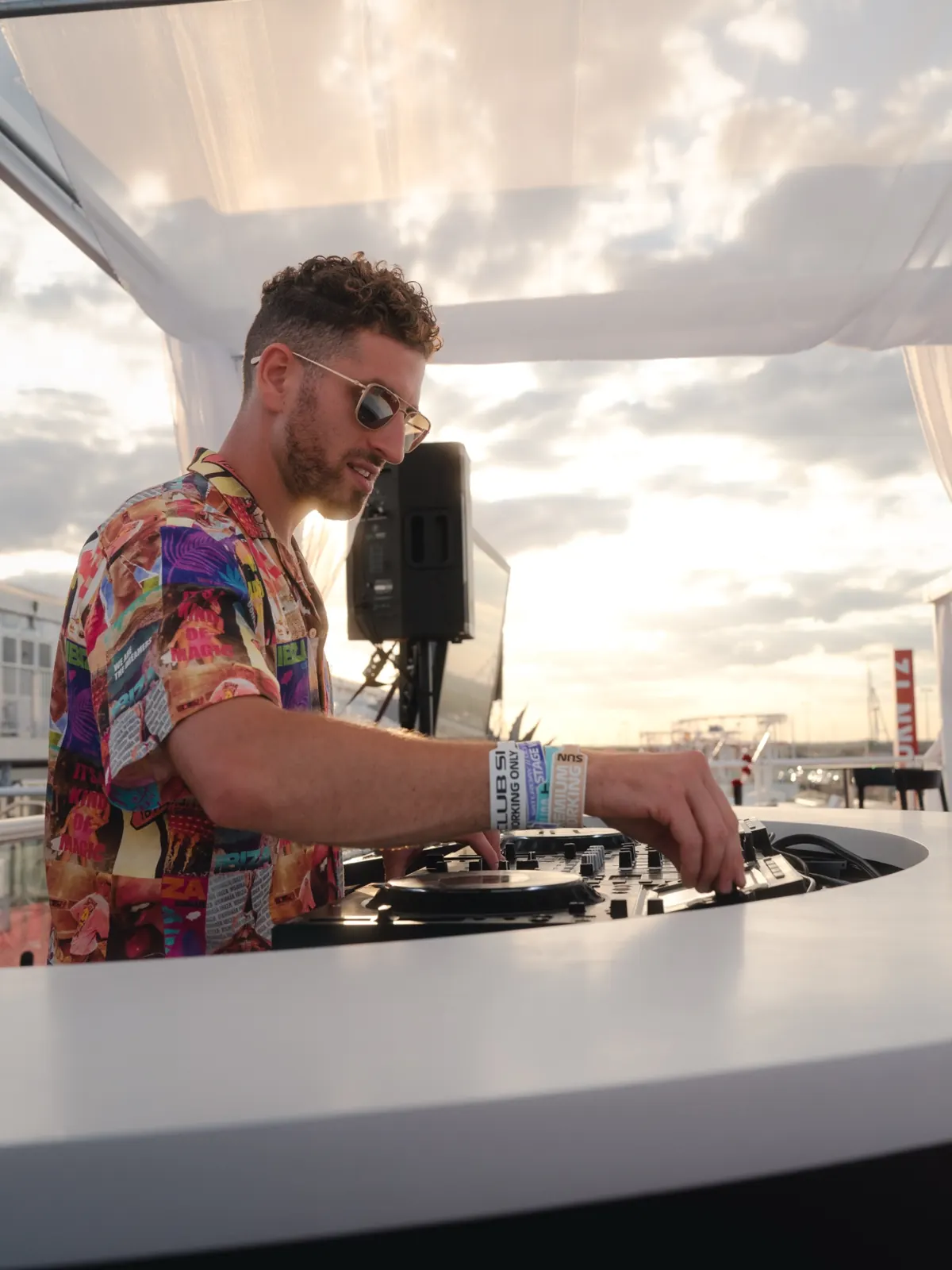
Jordan Miller performed in a hospitality suite during Formula 1 US Grand Prix weekend in Austin in 2024. He also performed at Podium Club at Circuit of The Americas during F1 USGP race weekend 2023 and on the party deck of Club SI at Circuit of The Americas during F1 USGP race weekend 2024. These performances at high-profile, fast-paced motorsport hospitality venues demonstrate the rigorous technical preparation and audio planning required for luxury brand activations.
Gain Staging and System Tuning Protocols
Distortion is the fastest way to ruin a high-end brand experience. To prevent digital clipping, engineers must practice strict gain staging throughout the entire system. Every point in the audio chain must have adequate headroom.
The master volume on the DJ mixer should never exceed zero decibels on the meter. The signal should hit the front-of-house console at a clean nominal level, allowing the main system amplifiers to do the heavy lifting. Pushing the DJ mixer into the red causes harsh square-wave distortion that can damage high-end line arrays and fatigue the ears of the guests. Maintaining clean gain staging also prevents microphone feedback, which is crucial when hosts make announcements or introduce brand executives during the VIP reception. For a deeper understanding of volume structure, refer to the planner's guide on what is gain staging and why venue sound systems distort.
During tuning, the engineer must ring out the microphones by boosting the system volume until feedback begins, identifying the offending frequencies, and cutting them using a parametric equalizer. This ensures that when the brand manager speaks, the microphone remains perfectly clear, even if they walk directly in front of a speaker fill.
Power Distribution and Safety for Temporary Premium Stages
F1 hospitality setups are often built on temporary structures with limited access to dedicated utility power. Audio production must share generator power with heavy catering equipment, high-powered lighting, and LED screens.
To avoid massive audio hums or sudden power failures, the audio system must run on its own isolated leg of the power distribution generator. Connecting audio equipment to the same electrical phase as commercial refrigerators or large lighting rigs introduces ground loop noise. This unwanted hum can ruin the high-fidelity sound expected at a premium brand event. Additionally, all stage power must be metered to ensure stable voltage, protecting delicate digital DJ decks, guitar modelers, and amplifiers from sudden drops or surges.
A typical premium temporary stage configuration requires a dedicated 100-Amp three-phase power distro. The audio production team must isolate its legs from any non-linear loads like catering ovens or LED walls, which inject high-frequency harmonic noise back into the neutral line.
Client Communication and Aesthetics: Hiding the Tech
At a luxury activation, visual design is just as important as audio quality. Sponsors and brand managers pay millions of dollars to ensure their aesthetic vision is executed perfectly. Large black speaker boxes, messy cable bundles, and metallic stands can easily clash with the clean branding of a high-end luxury brand activation.
For these events, the audio production team must coordinate with the scenic designers. Speaker cabinets are often color-matched to the venue walls or hidden behind acoustically transparent fabric panels. Every single cable must be taped down cleanly using premium gaffer tape or routed through low-profile floor ramps that match the venue flooring. Keeping a clean visual footprint ensures that the technology never distracts from the luxury cars, branding elements, and high-profile guests. Achieving this visual and physical balance is a core principle discussed in the guide to the best stage setup for live DJ and guitarists.
Planning an upscale brand experience requires highly detailed audio design. Contact Jordan Miller's team at contact to coordinate the technical production and hybrid musical entertainment for your upcoming luxury brand activation.
Common questions
How early should soundcheck begin for an F1 hospitality event?
Soundcheck should begin at least five hours before the doors open. This provides ample time for physical gear placement, system power-on, pink noise analysis, room tuning, and artist rehearsals before the venue becomes crowded with catering staff and brand managers.
Why do glass and steel VIP suites present unique audio challenges?
Glass and steel are highly reflective materials that bounce high-frequency sound waves unpredictably. This creates harsh echoes, room mud, and reduced vocal clarity. Audio engineers solve this by applying surgical EQ cuts and deploying distributed speaker fills at lower volumes instead of blasting from a single point.
How do you prevent audio equipment from clashing with luxury brand aesthetics?
To preserve visual branding, teams use color-matched speaker cabinets, hide subwoofers under stages or behind branded fabric, and route cables through low-profile, color-matched floor ramps. Clear coordination with the scenic design team ensures the technology remains invisible to the guests.
Why is a dedicated power circuit necessary for luxury event sound systems?
Sharing power with catering ovens, heavy lighting, or LED screens introduces ground loop hum and electrical noise into the audio signal. Running the PA system on a dedicated, isolated phase of the generator ensures clean sound and protects sensitive digital gear from power surges.
Go deeper
Stay in the loop
Not booking today?
Get tour dates, new music, and a heads up when booking availability opens. No spam, unsubscribe anytime.
Keep reading
- Country EDMBest Country DJs in Texas (2026): Specialists vs GeneralistsMost "country DJs" are open-format DJs with a country playlist. A few genuinely specialise. Here is the difference, and which Texas acts sit on each side of it.
- Event PlanningEvent Audio Troubleshooting: How to Prevent Mic FeedbackMicrophone feedback is a physical loop of sound caused when a live microphone picks up its own signal from a PA speaker and re-amplifies it. To stop it instantly, pull the
- Event PlanningXLR vs. TRS vs. RCA: The Event Planner's Guide to Audio CablesDemystify venue AV quotes. Learn the crucial differences between XLR, TRS, and RCA cables, and why using the wrong wire creates terrible event buzz.