DJ + Live Guitar · 4 min read
How Does Live Guitar Over DJ Set Work Technically?
An inside look at the signal chains, wireless routing, and digital modeling that make hybrid DJ and live guitar sets sound clean without stage bleed.
The short version
A hybrid DJ and live guitar setup integrates a digital guitar modeler directly into the mixing console to eliminate stage bleed. Wireless transmitters and shared MIDI clocks keep the performance mobile and perfectly synchronized with the DJ decks.
Short answer: Integrating live guitar into a DJ set requires routing a digital guitar modeling processor directly into the main audio console or DJ mixer, completely bypassing physical guitar amplifiers. This digital-direct approach eliminates microphone feedback and stage bleed, allowing the guitar to sit cleanly in the electronic mix. Wireless transmitters and synchronized BPM tempos ensure the guitarist has physical freedom while staying perfectly in time with the DJ decks.
The Core Problem: Stage Bleed and Volume Control
When event planners or production managers hear "live guitar," they often picture a heavy wooden amplifier sitting on stage. In a hybrid DJ performance, a traditional amplifier is a liability. DJ sets rely on clean, massive low-end frequencies and controlled high-end transients. If you place a physical guitar amplifier on stage and put a microphone in front of it, the high-volume DJ monitors and main front-of-house (FOH) subwoofers will bleed into that microphone. This causes feedback, muddy low-end frequencies, and a chaotic mix.
To make a live guitar work over an electronic set, performers use direct-in (DI) digital modeling gear. Devices like the Line 6 Helix, Quad Cortex, or Kemper Profiler simulate the sound of classic tube amplifiers digitally. The guitar plugs into the modeler, and the modeler sends a stereo line-level signal directly to the sound board. There are no microphones on stage. This keeps the stage quiet, prevents bleed, and allows the FOH engineer to control the guitar volume independently of the DJ tracks. For a broader look at this musical genre, see what is country EDM.
The Hybrid Signal Chain: From Strings to FOH
The technical routing of a hybrid act must be precise to avoid latency (audio delay). Humans can detect audio latency above 10 to 12 milliseconds. High-end digital modeling gear keeps latency under 2 milliseconds, making the performance feel instantaneous.
Here is the exact signal chain used in professional hybrid performances:
- The Instrument: A standard electric or acoustic-electric guitar equipped with a digital wireless transmitter.
- The Wireless Receiver: Placed in the DJ booth or a side-stage rack, receiving the high-frequency digital signal (usually in the 2.4 GHz, 5.8 GHz, or UHF band).
- The Modeler (The Brain): The receiver passes the clean guitar signal into a digital amp modeler. This unit applies virtual effects, amp simulation, and cabinet impulse responses (IRs).
- The DJ Mixer or FOH Console: The stereo output from the modeler runs via XLR cables into an available channel on the DJ mixer (like a Pioneer DJM-A9) or directly to the venue's main mixing console.
- In-Ear Monitors (IEMs): The performer wears wireless in-ear monitors. They receive a custom mix containing both the DJ deck output and the live guitar signal, shielding their hearing and keeping them in sync.
For detailed technical specifications and input lists, planners can review the country EDM technical rider.
Physical Stage Geometry and Wireless Performance
A hybrid set is not static. A performer needs space to move without disrupting the DJ equipment. Geometrically, the stage is divided into three distinct zones:
- The DJ Control Zone: The center hub. This houses the decks, mixer, laptop, and primary wireless receivers. It requires a stable, vibration-resistant table.
- The Performance Zone: The area directly in front of and to the sides of the DJ booth. This must remain clear of cables, monitors, and lighting fixtures to allow the guitarist to move safely.
- The Sightline Zone: The physical path between the guitar's wireless transmitter and the rack receivers. Planners must ensure that heavy stage structures, LED video walls, or dense crowds do not block this line of sight, which can cause signal dropouts.
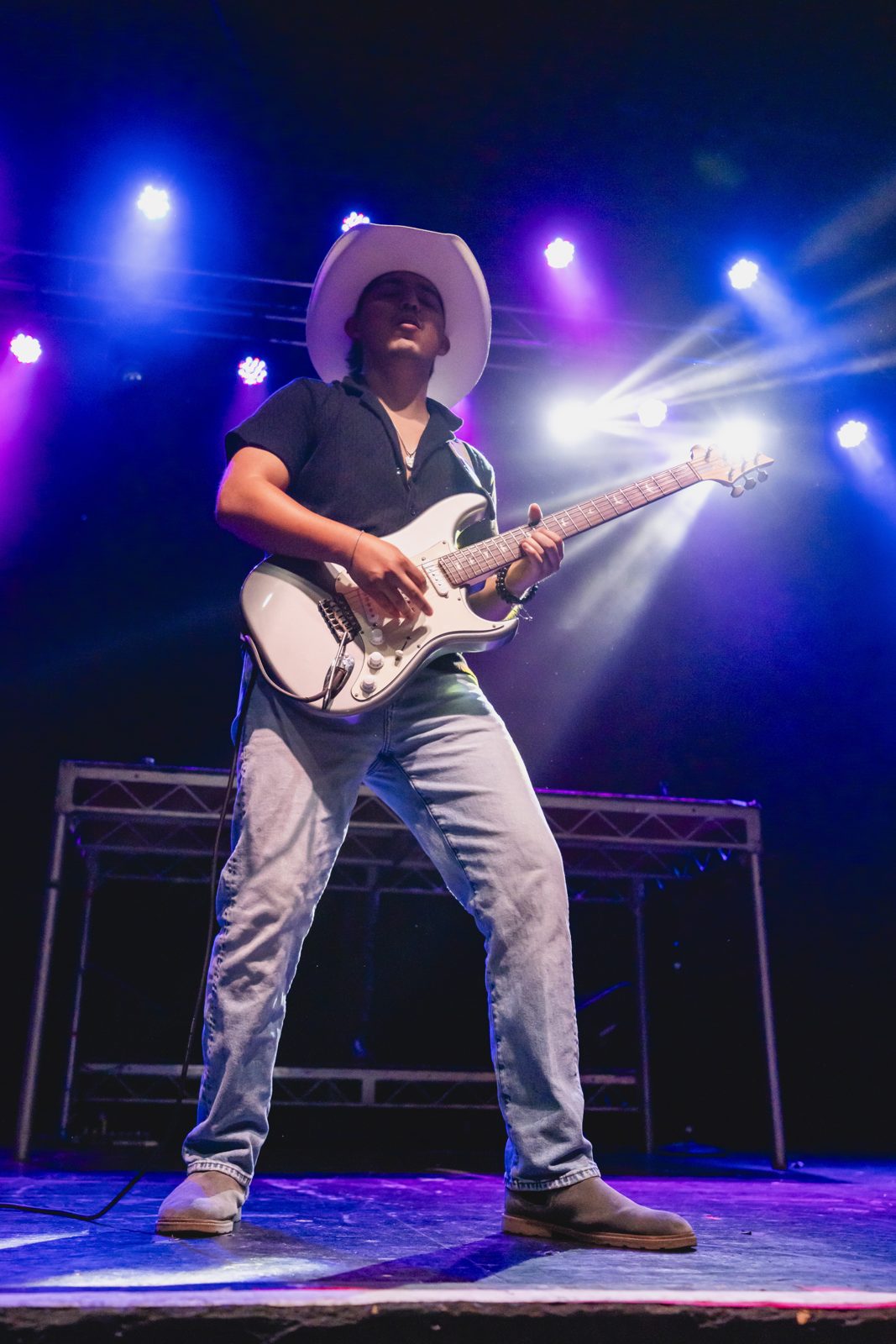
Jordan Miller uses this exact spatial layout to maintain energy during solo tours and DJ plus live electric guitar format sets as "Mixmode". By keeping the guitar wireless, the performer can step away from the decks to engage with the crowd while maintaining a perfect audio connection.
Tempo Synchronization: Keeping Guitar and Decks in Phase
How does a live instrumentalist play complex leads over shifting electronic tempos? It requires strict preparation and specific monitoring.
Unlike two traditional DJs syncing tracks via software, a live guitarist relies on their ears and a shared monitor mix. The DJ plays the electronic tracks, which are quantized to a master grid. The guitarist hears this grid clearly through their in-ear monitors.
In more advanced setups, MIDI clock data is sent from the DJ software (like Serato or Rekordbox) to the guitar processor. This syncs time-based guitar effects, such as delays and tremolos, directly to the BPM of the active track. If the DJ speeds up the track from 120 BPM to 128 BPM, the guitar's echo repeats speed up automatically. This eliminates manual adjustments on stage, allowing the performer to focus on playing.
Production Requirements and Cost Drivers for Planners
When booking a hybrid act for festivals or high-end corporate events, understanding the production footprint helps avoid last-minute rental fees.
Here are the key technical items to prepare for:
- Power Allocation: The hybrid setup requires clean, isolated power. Guitar modelers are computers; a power surge or dirty generator power can cause reboots mid-set. Plan for at least two dedicated 15-amp circuits at the DJ booth.
- Soundcheck Windows: A standard DJ needs 15 minutes to test lines. A hybrid act needs at least 30 to 45 minutes. The engineer must balance the dynamic range of a live instrument against the pre-compressed, mastered electronic tracks.
- FOH Channel Count: Ensure your sound engineer has at least four open channels on the main console: two for the stereo DJ mix and two for the stereo guitar processor.
This structured approach ensures the performance is as reliable as a standard DJ set while delivering the visual and acoustic impact of a live concert.
To discuss your venue's specific audio capabilities or review custom stage plots, visit the production and booking page.
Common questions
How does a hybrid setup prevent audio feedback and stage bleed?
Traditional guitar amplifiers on stage require microphones, which easily pick up the massive low-end bass and high-volume monitors from a DJ set. This causes uncontrollable audio feedback and muddy sound in the room. A hybrid setup solves this by using digital modeling gear like the Line 6 Helix or Quad Cortex. The live electric guitar plugs directly into the modeler, which connects straight to the front-of-house console or DJ mixer via XLR cables. This completely eliminates physical amplifiers and live microphones on stage, ensuring a clean, studio-quality electronic mix.
How do the DJ and live guitarist stay in perfect synchronization?
Keeping a live instrumentalist perfectly synchronized with electronic tracks requires precise monitoring and technology. The performer, such as guitarist Kristian Cruz in the duo Mixmode, wears wireless in-ear monitors (IEMs) to hear a custom audio mix of the DJ decks and their own guitar. For time-based effects like delays and tremolos, MIDI clock data is sent directly from the DJ software to the guitar modeler. This automatically matches the guitar's effects to the track's BPM, ensuring the performance remains locked in phase even if the DJ shifts tempos mid-set.
What are the main stage layout and wireless requirements for a hybrid show?
To maintain high energy, the guitarist must have freedom of movement. The stage is divided into a DJ Control Zone, a clear Performance Zone, and a clear Sightline Zone between the wireless transmitter and receivers. Planners must ensure that heavy stage structures, LED video walls, or dense crowds do not block this line of sight to avoid signal dropouts. For large-scale events, such as sets during Austin City Limits or Formula 1 USGP weekends, maintaining clean wireless frequencies and direct line of sight is essential to guarantee a flawless, uninterrupted performance.
How much production time is required for a hybrid DJ and live guitar soundcheck?
Unlike a standard DJ performance which might only require a fifteen-minute line check, a hybrid DJ and live guitar performance requires a dedicated thirty to forty-five minute soundcheck window. The front-of-house sound engineer must carefully balance the highly dynamic, live transients of the electric guitar against pre-mastered, heavily compressed electronic tracks. This process guarantees that the guitar sits perfectly in the stereo mix without overpowering the vocal tracks or losing the driving bass of the country EDM production.
Does the hybrid setup require specific power allocation at the venue?
Yes, digital amp modelers are essentially specialized computers. A sudden power surge or unstable voltage from a dirty generator can cause the unit to reboot mid-performance. Planners coordinating festivals or corporate events must allocate at least two dedicated, clean 15-amp circuits specifically for the DJ booth. This isolated power protects the sensitive wireless systems, playback laptops, and digital guitar processors from interference, preventing audio dropouts and ensuring the gear runs safely throughout the entire high-energy performance.
Go deeper
Keep reading
- DJ + Live GuitarIEMs vs Stage Wedges for Hybrid Live DJ Guitar SetsLearn why standard DJ wedges fail hybrid live acts and how in-ear monitors (IEMs) prevent guitar feedback while keeping the DJ in perfect sync.
- Event PlanningDecoding Event Audio Specifications: PA Systems for PlannersAn accessible guide to professional PA systems for event planners. Understand FOH, monitors, subwoofers, and how audio scalability impacts your budget.
- Event PlanningEvent Day Schedule Management: Load-In to Last Call GuideLearn how to build a foolproof music entertainment schedule from load-in to last call. Ensure smooth setups, perfect soundchecks, and zero timeline delays.