Weddings · 3 min read
Designing a Country EDM Wedding Cocktail Hour That Sets Up the Whole Night
Sixty minutes that decide how easy the rest of your reception is. Here is the three-phase structure I use and why the last ten minutes matter most.
The short version
A country EDM wedding cocktail hour shouldn't be background music; it is the ultimate setup for your dance floor. By structuring it in three 20-minute phases scaling from 95 to 110 BPM at a conversational volume, you transition guests smoothly into dinner and prep them for a packed night.
Short answer: run cocktail hour in three twenty-minute phases from about 95 up to 110 BPM, keep the volume low enough that nobody raises their voice, and finish slightly hotter than you started. Done right, the dance floor later takes one song to fill instead of four.
Most couples think of cocktail hour as background music. It is actually the cheapest insurance you can buy on the rest of the night.
The problem cocktail hour solves
After a ceremony, a room is emotionally high and physically scattered. People are hugging, finding drinks, and taking photos. If the music sits flat for an hour, the room cools down, and a cold room takes real work to reheat once the dance floor opens.
The fix is not "play louder." It is a gentle, deliberate rise.
Phase 1, minutes 0 to 20: acoustic and honest
Roughly 95 to 100 BPM. Acoustic country, outlaw-leaning material, singer-songwriter records. Nothing programmed, nothing with a four-on-the-floor kick. This phase matches the emotional temperature of a room that just watched a ceremony.
Volume: conversational. If two people at the bar have to lean in, it is too loud, and you will hear about it.
Phase 2, minutes 20 to 40: organic country house
Roughly 100 to 106 BPM. This is the bridge: country vocals and real instrumentation over relaxed, organic house drums. The kick is present but soft. Guests will not identify this as a genre change; they will just notice the room feels more alive.
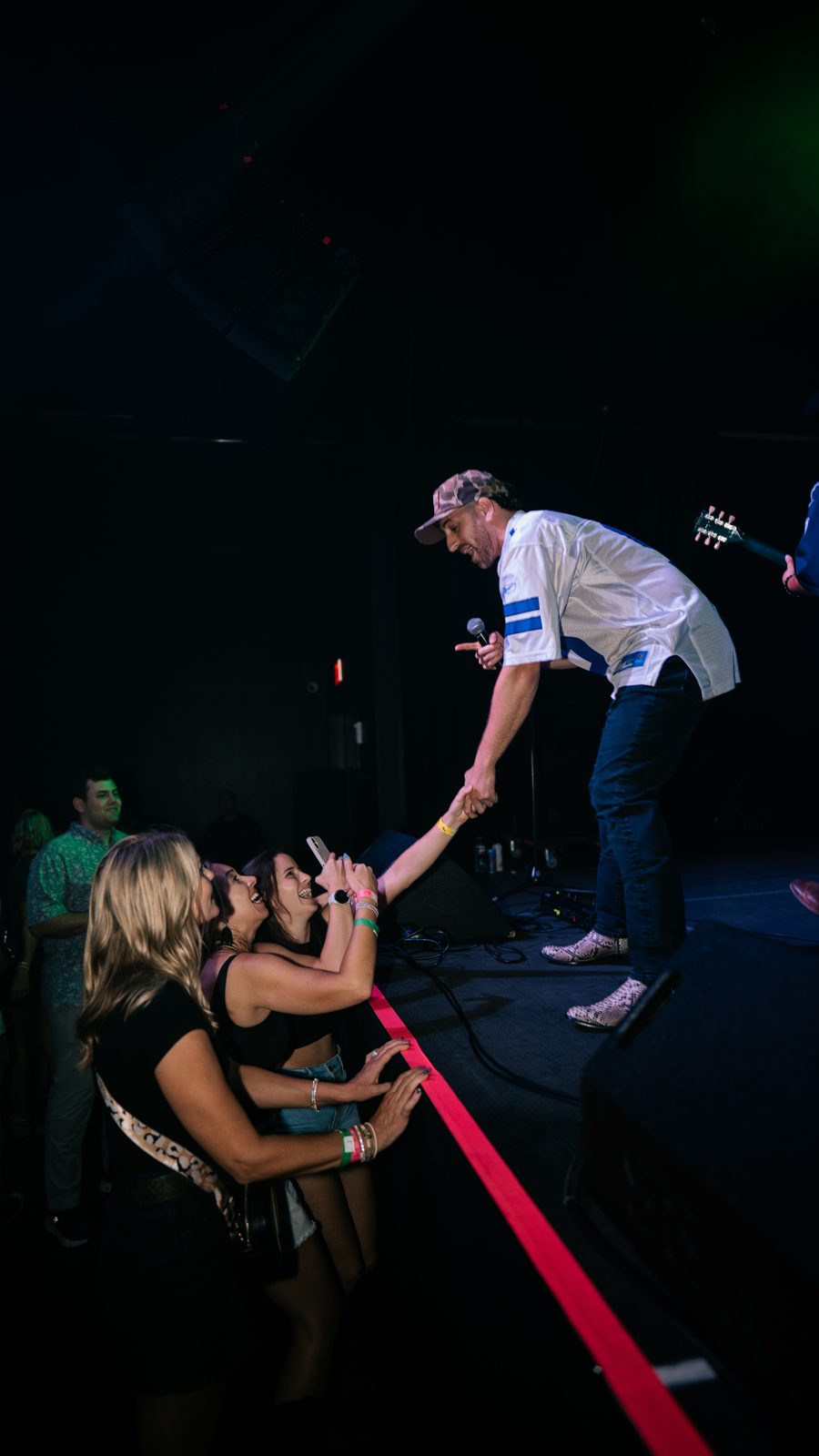
This phase is also where a live guitar earns its money. In the Mixmode format, Kristian playing over these records reads as a band rather than a playlist, and it gives people something to look at while they are standing around.
Phase 3, minutes 40 to 60: the pitch
Roughly 106 to 110 BPM. Slightly more energy, slightly more low end, still nothing anyone would call EDM. The point is to hand the room to dinner or to the dance floor already leaning forward.
A useful test: if the last song of cocktail hour could open the dinner block without a jolt, the phase is right.
Volume, the part everyone gets wrong
Every complaint I have ever received at a wedding came from cocktail hour or dinner volume, never from the late-night block. Cocktail hour is a conversation event with a soundtrack. Speaker placement matters more than level here - coverage spread around the space at low volume beats one loud stack in a corner.
Outdoor cocktail hours need more speakers at lower volume, not fewer at higher, because there are no walls to help.
How this sets up the pivot
The full reception programming guide covers the rest of the curve, but the connection is simple: cocktail hour that ends near 110 BPM means the dance floor opens around 115 instead of leaping from silence. That is one less genre jump for the room to survive.
What to tell your DJ
- The vibe words that actually matter to you, in plain English.
- Any do-not-play records. One short list is worth more than a long must-play list.
- Whether cocktail hour is indoors, outdoors, or split between spaces.
- Whether there is a live element and where it will physically stand.
Illustrative example
Example scenario, not a real booking: a 120-guest reception with cocktail hour on a patio and dinner inside. Patio gets four small speakers at low level rather than two loud ones. Phases run 95, 103, and 109 BPM. Live guitar sits in for the middle twenty minutes. Guests walk into dinner already warm, and the dance floor opens forty minutes later at 115 with a full floor by the second song.
Common questions
What is the benefit of a phased BPM approach during a wedding cocktail hour?
Standard wedding playlists maintain a static tempo, which leaves the room's energy flat and makes opening the dance floor incredibly difficult. By structuring your cocktail hour in three distinct twenty-minute phases that rise from 95 BPM to 110 BPM, you gently prime your guests' heart rates. The transition feels entirely natural because it mirrors the rising social energy of the room. By the time dinner starts, guests are physically primed and ready for higher tempos, meaning your DJ won't have to work to revive a cold room when the dance floor finally opens.
How does live electric guitar fit into a country EDM cocktail hour?
Having a live element like Kristian Cruz playing electric guitar alongside Jordan Miller in their Mixmode project completely changes the dynamic. During Phase 2 and Phase 3 of the cocktail hour, live electric guitar riffs over organic country house beats provide a visual and auditory focus. This setup functions like a live band rather than a passive playlist, giving guests something engaging to watch while they mingle, without overwhelming the space with high-volume stage noise. It keeps the atmosphere interactive yet conversational.
How do you prevent the cocktail hour music from being too loud for guests to talk?
The biggest mistake planners make is using a single, loud sound source to cover an entire space. To maintain a conversational volume, we focus on speaker placement rather than sheer volume. By distributing multiple smaller speakers throughout the cocktail area—especially in outdoor spaces where sound escapes—we ensure even coverage at a lower decibel level. Guests can easily converse without raising their voices, yet they will still feel the steady, rhythmic energy of the music as it transitions from acoustic country to country EDM.
How does the cocktail hour program transition into the rest of the wedding reception?
A successful cocktail hour serves as the musical bridge to dinner and dancing. Because the third phase of our cocktail hour concludes around 110 BPM, the energy level transitions seamlessly into the dinner block without any sudden, awkward drops in tempo. When it is time to open the dance floor later in the night, the DJ can start at 115 BPM rather than trying to leap from near-silence. This careful pacing prevents sudden genre shocks and guarantees a much smoother musical transition for your guests.
Go deeper
Sources & references
Keep reading
- WeddingsWedding Reception Timeline: Transitioning Dinner to DancingLearn how to seamlessly transition your wedding reception from quiet dinner to a high-energy dance floor using the four-zone sound method and bridging hour techniques.
- WeddingsWedding DJ Packages Compared: Solo vs. Duo vs. HybridCompare wedding DJ packages from standard solo sets to hybrid live guitar duos. Learn how footprint, technical riders, and guest flow impact your wedding entertainment budget.
- WeddingsHow to Mix Country and EDM at Your Wedding Without Emptying the Dance FloorThe full reception flow, hour by hour and BPM by BPM, from someone who plays these nights for a living. Includes the pivot that actually moves a mixed crowd, and the mistakes I have made doing it.