Weddings · 4 min read
How to Mix Country and EDM at Your Wedding Without Emptying the Dance Floor
The full reception flow, hour by hour and BPM by BPM, from someone who plays these nights for a living. Includes the pivot that actually moves a mixed crowd, and the mistakes I have made doing it.
The short version
Seamlessly blending country and EDM at your wedding requires treating the reception as a single rising tempo curve—from 95 BPM at cocktail hour to 128 BPM late night. By using a strategic three-song pivot driven by real-time dance floor energy rather than a strict timeline, you can bridge genres without losing the crowd.
Short answer: treat the reception as one rising tempo curve rather than two genres taking turns. Start around 95 BPM at cocktail hour, finish near 128 BPM at last call, and never jump more than roughly 8 BPM at once. If guests can tell you exactly when the music "changed," the transition was too steep.
Weddings are the hardest programming job I do, and it is not close. A festival crowd chose the genre. A wedding crowd contains your college roommates, your parents, and someone's grandmother, and all of them are entitled to a good night.
The curve, hour by hour
Cocktail hour, roughly 95 to 105 BPM. Acoustic and outlaw-leaning country, plus organic house records with real instrumentation. Nobody dances at cocktail hour and nobody should. The job here is atmosphere and volume discipline - people need to hear each other.
Dinner, roughly 100 to 112 BPM. Familiar country with a pulse under it. This is where the older half of the room decides whether they trust the DJ. Get this wrong by pushing too hard and you spend the rest of the night winning them back.
Dance floor open, roughly 112 to 120 BPM. Shared classics - the records both generations already know - rebuilt with dance drums. This is the single most important block of the night. Open with something everyone knows and the floor fills in one song.
The pivot, roughly 118 to 124 BPM. See below.
Late night, 124 to 128 BPM. Full Country EDM. Drops, lights, and the part your friends will post.
The three-song pivot
The move that actually works, and the one I would defend in any planning call:
- A country record everyone in the room knows, played fairly straight. Full floor, full singalong.
- The same energy, dance drums underneath. A country vocal over four-on-the-floor at a tempo only a few BPM above the last song. Nothing has "changed" yet as far as the room is concerned.
- The first real drop. Now the country hook is the payoff rather than the bed.
Three songs, maybe eight BPM total, and the room has crossed genres without a single person deciding whether they approve.
What I got wrong early on
I used to pivot on the clock. Ten o'clock, drop the tempo change, because that is what the timeline said. It failed in front of me more than once - a full floor at 9:58, forty people standing at the bar at 10:04.
The floor tells you, not the timeline. If the room is still deep in the country block when the plan said to move, play one more and pivot on the next song. A timeline is a hypothesis. The dance floor is the data.
When the crowd skews older than expected
It happens, and it should be planned for rather than discovered. Two adjustments:
- Extend the shared-classics block. It is the widest-appeal music of the night and there is no rule capping it at 40 minutes.
- Push the pivot later and shorten the late-night block. A shorter peak that lands beats a long peak nobody is on the floor for.
Where live guitar fits
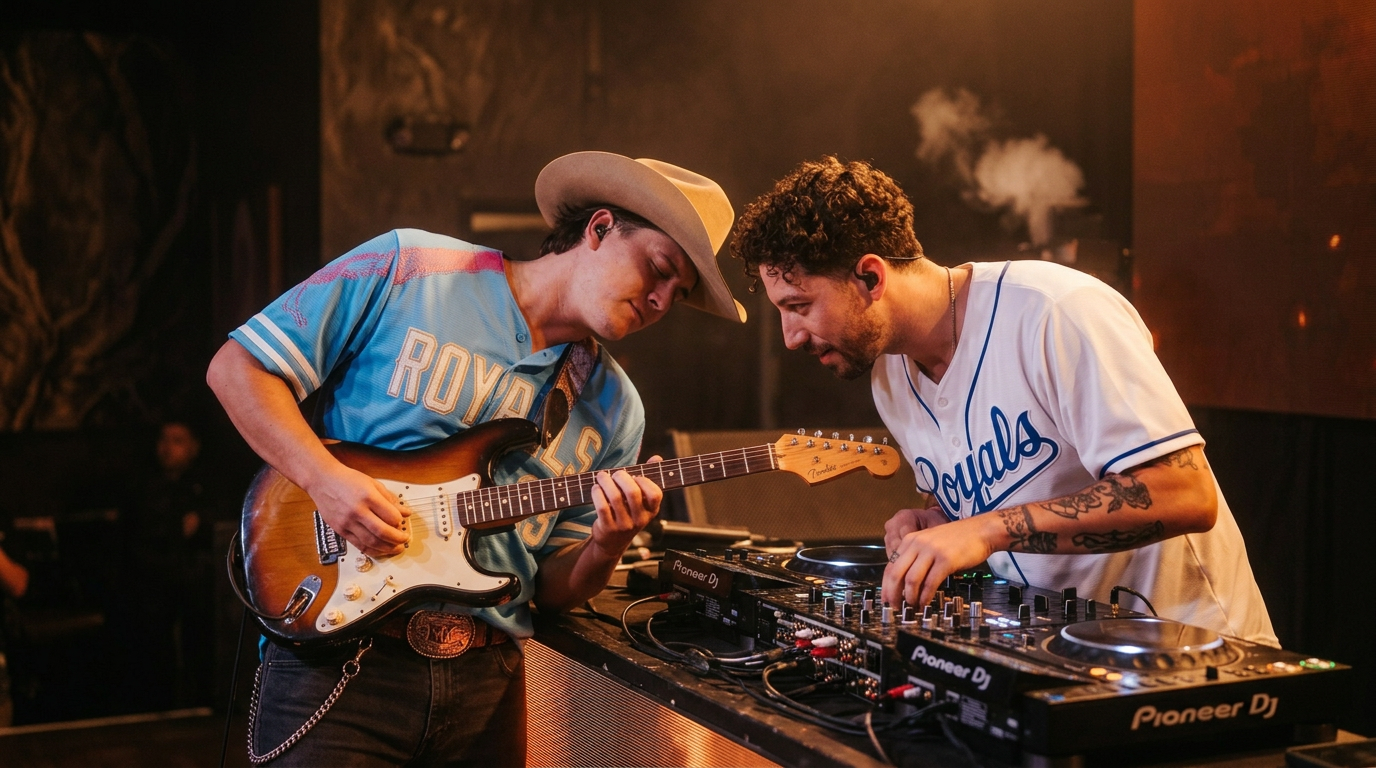
The Mixmode format puts Kristian on live electric guitar over the DJ set. At weddings the practical value is not the drops, it is the parts of the night where a DJ has nothing to look at. Cocktail hour with a live player sounds like a band. The first dance can have a live guitar line over it. And during the late-night block, a live solo over a drop gives guests a reason to face the stage instead of their phones.
If your venue has a low ceiling or a small stage, ask before assuming it fits. Two performers need more room than one.
Practical rules I would put in your planning doc
- One do-not-play list beats a 60-song must-play list. Tell your DJ what will kill the night; let them solve how to fill it.
- Protect the volume during dinner. Every complaint I have ever received at a wedding traced back to dinner volume, not to the late-night block.
- Put the special dances early in the dance block, not in the middle of peak hour. They stop momentum and momentum is expensive to rebuild.
- Decide the send-off song in advance. It is the only song of the night worth locking.
- Walk the room with your DJ if you can. Outdoor receptions, barns, and hard-surfaced halls all behave differently, and coverage decisions are made in the room, not over email.
Illustrative example
Example scenario, not a real booking: a 150-guest Hill Country wedding with a 6 PM ceremony. Cocktail hour 95 to 105 BPM acoustic. Dinner 100 to 112. Dance floor opens at 8:45 with shared classics at 115. Pivot lands around 9:40 when the floor is full, not when the clock says. Late night 124 to 128 until an 11 PM curfew, with the send-off song locked in advance. That shape works for most receptions of that size, and it is a starting point to adjust rather than a script.
Common questions
How do you transition smoothly between country and EDM without jarring the wedding guests?
The key is to avoid sharp genre jumps on the clock. Instead of treating country and EDM as separate blocks, think of your reception as a single, gradual tempo curve. We start with lower-BPM organic sounds during cocktail hour and dinner, then slowly build the energy. When it's time to shift, we use a three-song transition strategy: starting with a familiar country singalong, moving to a country vocal underpinned by steady dance drums, and finally dropping into a full Country EDM record. This keeps guests of all generations moving without realizing the genre has changed.
What is the benefit of booking a hybrid DJ and live guitar performance like Mixmode for a wedding?
Bringing Mixmode—featuring Austin-based country EDM DJ Jordan Miller and live electric guitarist Kristian Cruz—to your wedding adds a dynamic concert element that traditional DJs can't match. Kristian's live guitar adds premium atmosphere to cocktail hour, a gorgeous live layer over your first dance, and high-energy stage presence during late-night drops. With a proven record of over 500 shows, 10 million streams, and a feature in Billboard, this hybrid setup gives guests an engaging performance to watch, keeping the dance floor packed and bringing festival-level production to your special day.
How should we manage volume levels so older guests don't leave early?
Volume management is critical for keeping guests of all ages comfortable. We actively protect the volume during dinner and cocktail hour so family members can talk without shouting. By keeping sound levels disciplined early on, we build trust with the older half of the room. When the party shifts to late-night Country EDM, the volume can naturally elevate on the dance floor while maintaining a comfortable room balance overall. Proper floor coverage and walking the venue with your DJ ensures the audio remains clean, controlled, and appropriate for every phase of the wedding.
Should we stick strictly to our wedding timeline for music changes?
No, a wedding timeline is a guide, not a rulebook. Forcing a genre or tempo change just because the clock strikes ten can instantly clear a packed dance floor. A professional DJ reads the room and pivots based on real-time energy. If your guests are thoroughly enjoying a particular style, we stay with that momentum and execute the transition when the floor is primed. Trusting your DJ to make data-driven decisions based on the crowd's reaction ensures the transition into late-night country EDM feels completely natural.
What is the best way to plan our must-play and do-not-play lists?
We highly recommend focusing on a concise do-not-play list rather than a massive 60-song must-play list. A long, rigid list of required songs restricts your DJ's ability to read the crowd, adapt to the room's energy, and execute seamless transitions. By telling us exactly what artists or tracks will kill the mood for you, you set the boundaries while letting us solve how to keep the dance floor full. This collaborative approach allows us to blend classic tracks and modern country EDM edits perfectly.
Go deeper
Sources & references
Keep reading
- WeddingsWedding Reception Timeline: Transitioning Dinner to DancingLearn how to seamlessly transition your wedding reception from quiet dinner to a high-energy dance floor using the four-zone sound method and bridging hour techniques.
- WeddingsWedding DJ Packages Compared: Solo vs. Duo vs. HybridCompare wedding DJ packages from standard solo sets to hybrid live guitar duos. Learn how footprint, technical riders, and guest flow impact your wedding entertainment budget.
- WeddingsDesigning a Country EDM Wedding Cocktail Hour That Sets Up the Whole NightSixty minutes that decide how easy the rest of your reception is. Here is the three-phase structure I use and why the last ten minutes matter most.