Country EDM · 4 min read
Cost to Book Hybrid DJ Live Guitarist: Solo vs. Duo Playbook
Understand the pricing, technical routing, and travel logistics differences when deciding between booking a solo electronic DJ or a hybrid live guitar duo.
The short version
Booking a solo country EDM DJ ranges from $1,500 to $5,000, while a hybrid DJ and live electric guitarist duo like Mixmode costs $3,500 to $10,000+. The pricing gap reflects doubled travel, specialized signal routing, and rehearsal overhead, yielding a festival-level energy that solo acts cannot match.
Short answer: Booking a solo country EDM DJ typically costs between $1,500 and $5,000 for private or corporate events, while a hybrid DJ and live guitarist duo ranges from $3,500 to over $10,000. This pricing gap reflects doubled travel expenses, increased rehearsal overhead, and the complex audio engineering required to blend live instruments with digital playback. Planners must weigh the higher energetic impact of a duo against the simplified logistics of a solo performer.
When analyzing the cost to book hybrid dj live guitarist options, the primary drivers are talent fees, travel logistics, and production support. A solo DJ manages a single performance fee. For a DJ plus live electric guitar format, the rate must cover two professional musicians who rehearse together to sync live instrumental parts with electronic tracks.
Direct Cost Breakdown: Solo DJ vs. DJ plus live electric guitar format
Here is a realistic look at the baseline cost differences for mid to high end events:
- Solo DJ: $1,500 to $5,000 (local or regional), plus single travel/lodging.
- DJ plus live electric guitar format (DJ + Guitarist): $3,500 to $10,000+ (national or touring), plus double travel/lodging.
- Production Rider: Solo setups require standard CDJs and a mixer. Duo setups require additional audio inputs, wireless systems, and specific monitors.
These figures reflect the market rates for experienced touring acts who have played major festivals like Austin City Limits or SXSW, rather than local hobbyists.
Technical and Signal Chain Requirements
The technical footprint of a DJ plus live electric guitar format is significantly larger than a solo DJ set. A standard electronic performance is highly predictable. The DJ feeds a stereo signal from a mixer directly to the front-of-house (FOH) PA system.
Integrating a live electric guitar over an active electronic mix introduces complex audio routing. The guitar cannot simply be plugged into a spare channel on the DJ mixer without losing tone control and dynamics. To understand the details, review the guide on how live guitar over a DJ set works technically.
The signal chain for a duo like Mixmode generally requires:
- A wireless guitar transmitter (such as a Shure GLXD) sending to a receiver.
- A digital amp modeler or pedalboard (like a Line 6 Helix or Fractal Audio FM3) to process the guitar tone without stage volume.
- A stereo Direct Injection (DI) box feeding directly to the main stage snake.
- Independent monitor mixes, allowing the guitarist to hear the master DJ track and their own instrument clearly.
This routing ensures the FOH engineer can balance the guitar level against the master track. For a detailed breakdown of these requirements, planners can consult the country EDM technical rider and production guide.
Crew Logistics and Travel Budgets
Travel logistics scale linearly with the number of people on the road. For fly-in dates outside of Texas, booking a solo act means purchasing one flight, one hotel room, and one ground transport vehicle.
A DJ plus live electric guitar format doubles these immediate costs. You must budget for:
- Two round-trip flights with additional baggage fees for guitar flight cases.
- Two hotel rooms booked at the same venue-approved property.
- Larger ground transport, such as an SUV, to accommodate gear cases alongside luggage.
- Double the daily per diems for the traveling crew.
If you are planning an event in markets like Chicago or Phoenix, sourcing an artist with a proven touring history ensures these travel logistics are handled efficiently. You can learn more about managing these contracts in our guide on how to book a country EDM DJ.
Performance Impact and Event Vibe Tradeoffs
The choice between solo and duo is not just financial; it changes the energy of the room. A solo DJ excels at maintaining a continuous, highly flexible flow. They can read the crowd and pivot genres instantly because they do not have to coordinate transitions with another musician on stage.
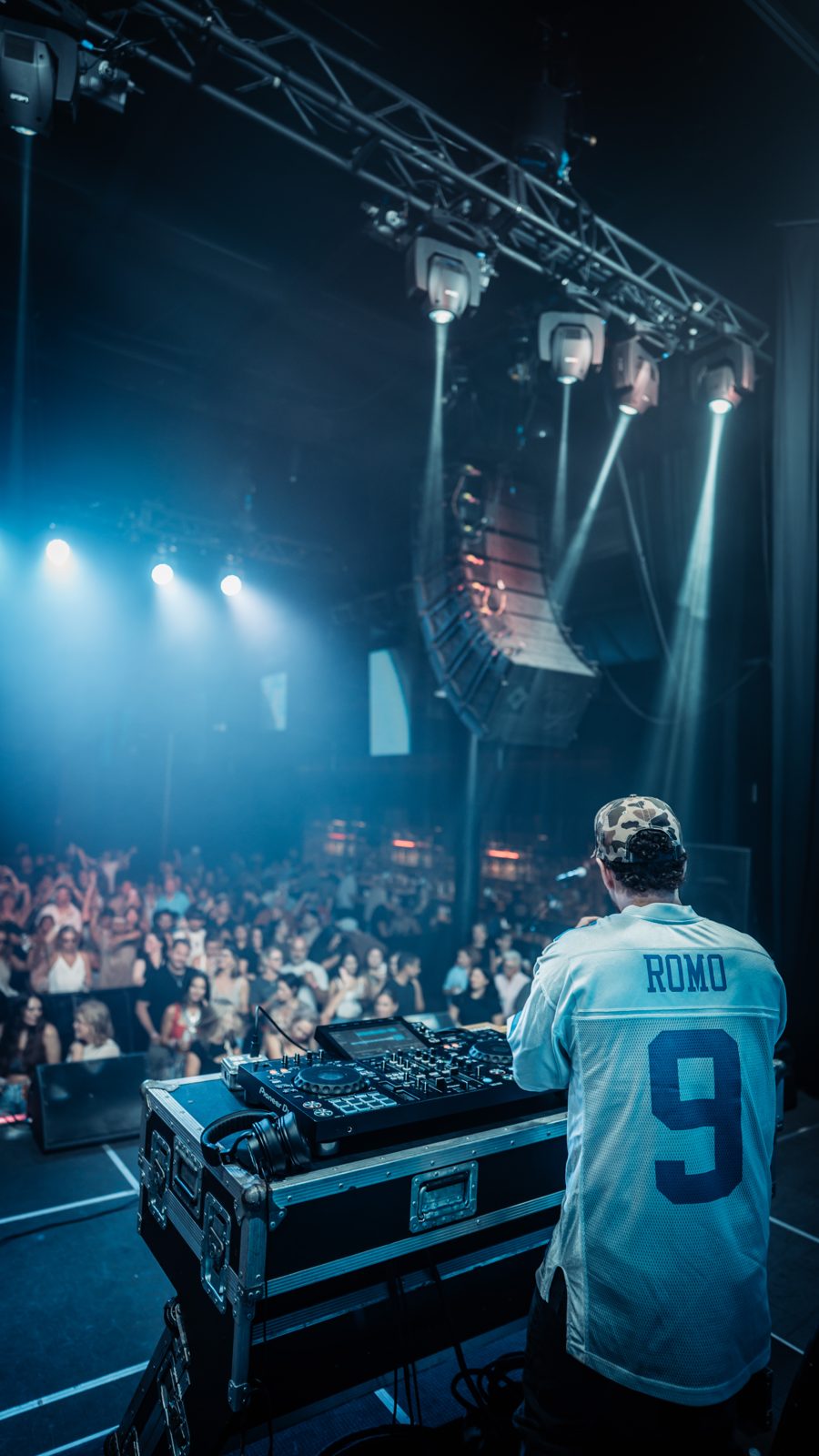
A DJ plus live electric guitar format, however, provides a focal point for the audience. The presence of a live guitarist, like Jordan Miller playing over a high-energy electronic set, bridges the gap between a concert and a dance party. The visual element of a live musician moving across the stage creates a festival-style atmosphere. This hybrid dynamic is particularly effective for high-end corporate events and major sporting events, where the audience expects a production that feels like a live band rather than a standard DJ set.
Venue Assessment: Can Your Space Support a DJ plus live electric guitar format?
Before committing to the budget of a DJ plus live electric guitar format, you must verify that your venue can handle the physical and technical demands.
- Stage Footprint: A solo DJ needs a steady 8-by-6-foot riser. A DJ plus live electric guitar format needs at least a 12-by-8-foot space so the guitarist can move safely without tripping over cables.
- Soundcheck Window: A solo DJ can plug in and perform a basic line check in fifteen minutes. A DJ plus live electric guitar format requires a dedicated soundcheck of thirty to forty-five minutes to dial in wireless guitar frequencies, monitor mixes, and FOH balance.
- Power Drops: You will need separate, clean power circuits for the DJ setup and the guitar pedalboard to prevent ground hum in the PA system.
If your venue has strict noise curfews or minimal stage space, a solo performer might be the safer and more practical choice. If you have the production budget and space, the DJ plus live electric guitar format delivers a far more memorable experience.
To discuss technical requirements or request a quote for your next event, contact the booking team directly at /contact.
Common questions
Why does a hybrid DJ and live electric guitarist duo cost more than a solo DJ?
Sourcing a hybrid duo like Mixmode (featuring country EDM DJ Jordan Miller and live electric guitarist Kristian Cruz) involves higher costs due to multiplied professional talent fees, dual travel accommodations, and rehearsal logistics. Unlike a solo DJ who travels with basic controller gear, a duo requires double the flight tickets, larger transport vehicles for guitar flight cases, and two separate hotel rooms. Technically, it also demands robust routing infrastructure like digital amp modelers, wireless transmitters, and dedicated soundchecks to blend the live guitar seamlessly over electronic tracks, driving up the production overhead.
What technical riders are required for a hybrid DJ and electric guitar set?
A hybrid set requires more than standard DJ equipment. Planners must accommodate a wireless guitar transmitter system, a stereo Direct Injection (DI) box, and a digital amp modeler such as a Line 6 Helix to keep stage volume silent. Additionally, independent monitor mixes (either stage wedges or in-ear monitors) are vital so the guitarist and DJ can hear both the master track and the live instrument clearly. Finally, the stage footprint must expand to at least 12-by-8 feet to ensure safe movement during high-energy performances.
Can a hybrid DJ and live guitarist perform at corporate events and festivals?
Yes, this high-energy format is highly sought after for major events. Jordan Miller and Kristian Cruz perform as Mixmode across the country, drawing on a history of over 500 shows and performances during marquee weekends like Austin City Limits, SXSW, and the Formula 1 USGP in Austin. A hybrid duo bridges the gap between a standard dance set and a live concert, making it a perfect fit for upscale corporate events, weddings, and music festivals that demand visually engaging, festival-grade entertainment.
How long is the soundcheck process for a hybrid duo compared to a solo DJ?
While a solo DJ can plug in and perform a basic line check in about fifteen minutes, a hybrid DJ and live electric guitar duo requires a dedicated soundcheck window of thirty to forty-five minutes. This time is necessary for the front-of-house engineer to balance the live guitar levels against the stereo master track, test wireless frequencies for interference, and dial in the monitor mixes. This step prevents feedback and ensures the instrument cuts cleanly through the heavy low-end of electronic dance music.
Does travel pricing change for events booked outside of Austin, Texas?
Yes. While local performances in Austin, Dallas, or San Antonio involve minimal ground travel costs, national fly-out dates require comprehensive travel buyouts. This includes booking round-trip flights for both Jordan Miller and guitarist Kristian Cruz, baggage fees for fragile guitar flight cases, an SUV-sized ground transport vehicle to haul gear, and separate hotel rooms. Budgets scale linearly with crew size, meaning fly-out events outside Texas will require a larger travel allocation than regional driving-distance bookings.
Go deeper
Stay in the loop
Not booking today?
Get tour dates, new music, and a heads up when booking availability opens. No spam, unsubscribe anytime.
Keep reading
- Country EDMWhat Is Country EDM? Definition, Origins, and How the Sets Actually WorkA working definition from someone who plays it for a living: what Country EDM is, where it came from, how the tempo map of a real set works, and why the difference matters when you are booking one.
- For Talent BuyersSecuring Your Event Date: DJ Booking Deposits and RetainersLearn the financial and legal mechanics of booking event entertainment. Master the difference between non-refundable retainers, deposits, and cancellation policies.
- DJ + Live GuitarBest Stage Setup for Live DJ and Guitarist: Sound vs SightlineHow to design a hybrid DJ and live guitar stage. Solve acoustic feedback, position amplifiers, and protect audience sightlines with this professional layout guide.