Event Planning · 4 min read
Understanding DJ Riders: A Practical Guide for Event Planners
What is a DJ rider and why does your event need one? Learn the practical reasons behind technical gear, power, staging, and monitor requirements from an artist's perspective.
The short version
A DJ rider is a legally binding blueprint of technical, staging, and hospitality requirements. Planners must meet these terms to ensure proper sound quality, prevent power failures, and guarantee a successful performance.
Short answer: A DJ rider is a contractual document that specifies the technical equipment, power, staging, and hospitality setup required for a performance. Event planners need to follow it to prevent audio failures, equipment damage, or a breach of contract that could cancel the show.
What is a DJ Rider? (And Why Planners Need to Care)
A rider is an addition to the performance contract. It outlines what the venue or planner must provide to make the show happen. Riders are divided into two main categories: the technical rider and the hospitality rider.
Planners sometimes view riders as a list of arbitrary demands. In reality, a technical rider is a manual for a successful event. If a DJ arrives and the venue lacks the correct cables, power, or mixers, the show cannot start on time. Understanding these requirements helps you budget accurately and avoid unexpected last-minute rental costs.
The Technical Rider: Gear and the Signal Chain
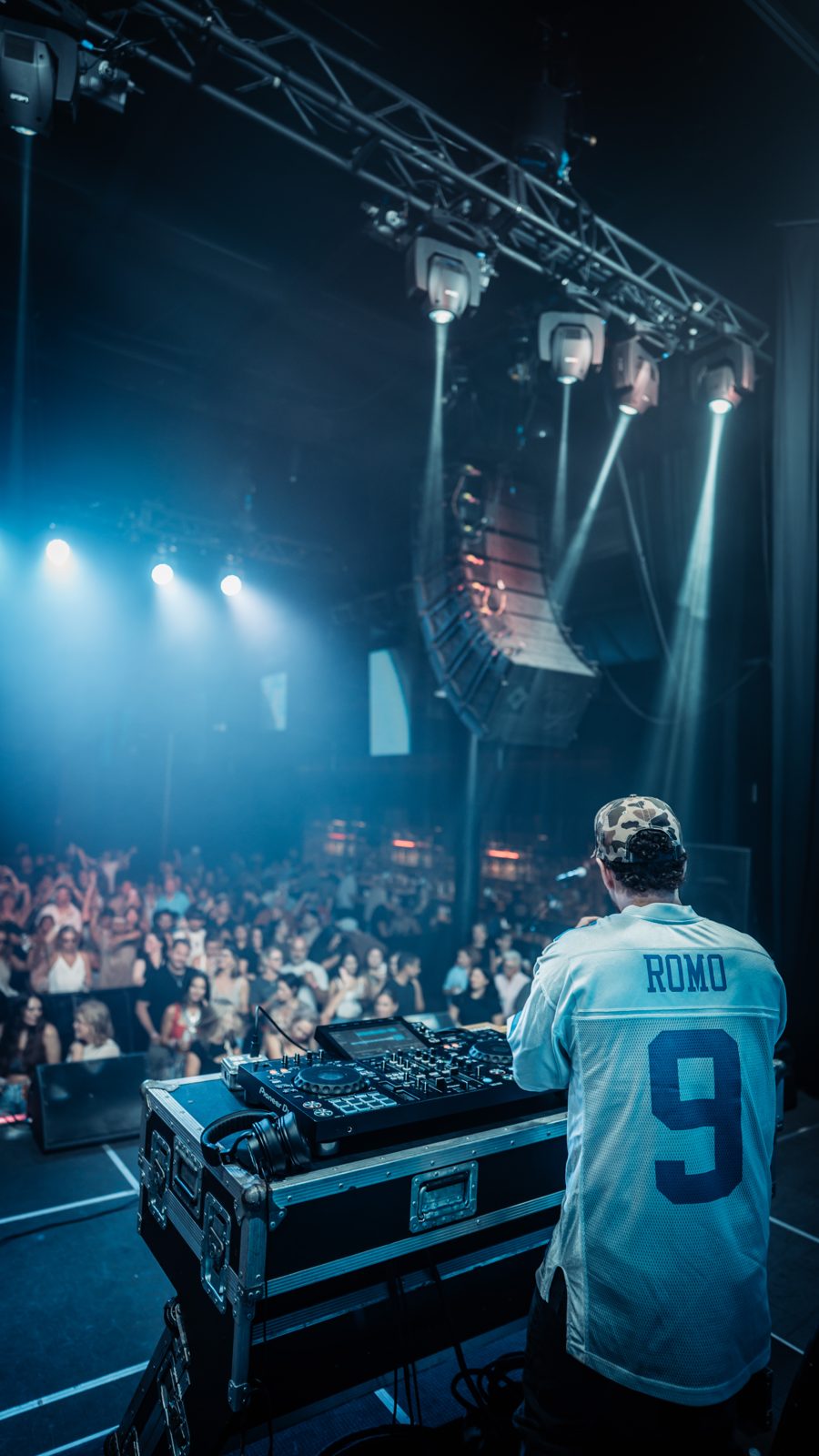
The technical rider lists the exact deck models, mixers, and inputs required. Professional touring DJs rely on industry-standard gear, typically Pioneer CDJ-3000 media players and a DJM-V10 or DJM-900NXS2 mixer.
DJs require specific gear because they rely on physical muscle memory. The buttons, jog wheels, and faders must be exactly where they expect them to be. A split-second delay in locating a cue button can ruin a transition.
The signal chain is how the sound travels from the stage to the audience:
- The DJ media players read files from a USB drive.
- The players send digital or analog audio signals to the mixer.
- The mixer sends a stereo output to the Front of House (FOH) sound board.
- The FOH system routes the signal to the amplifiers and main venue speakers.
For a hybrid performance, like Jordan Miller playing live guitar over electronic tracks, the signal chain is more complex. It requires extra direct input (DI) boxes and balanced lines to route the instrument sound without feedback or interference. You can read more about how this functions in our guide on how live guitar works technically.
Power and Staging: The Silent Performance Killers
Audio gear is highly sensitive to power drops and physical movement. Two areas where planners often run into trouble are electrical supply and stage stability.
- Dedicated Power: Standard household outlets share circuits. If you plug a DJ rig, lighting fixtures, and a catering coffee maker into the same circuit, the breaker will trip. Technical riders usually ask for dedicated 20-amp circuits. This means no other equipment is drawing power from that breaker.
- Stage Stability: Subwoofers produce massive low-end vibrations. If the DJ table is flimsy, these vibrations travel up into the media players and laptops. This can cause physical connections to loosen or screen displays to flicker. A solid, braced stage deck is necessary to keep the equipment stable.
Sound Engineers and Booth Monitors: The Artist's Ears
Planners often ask why a DJ needs monitor speakers pointing at them if the room already has a massive sound system.
Sound travels at roughly 1,130 feet per second. In a large corporate hall or venue, the main speakers face the audience. The sound bounces off the back wall and returns to the stage fractionally late. This physical echo makes precise beatmatching impossible.
Booth monitors are dedicated speakers placed on the stage, facing the performer. They provide zero-latency sound. This allows the DJ to hear exactly what is happening in real time without acoustic delay.
An on-site sound engineer is also essential. The acoustics of an empty room change when hundreds of guests arrive. An engineer sits at the FOH board to adjust frequencies, manage volume limits, and ensure the music sounds balanced throughout the space.
The Hospitality Rider: Logistics and Care
The hospitality rider covers the human element of the production. While some high-profile riders contain unusual requests, most professional riders are highly practical. They focus on keeping the artist safe, hydrated, and ready to perform.
A typical hospitality rider requests:
- Bottled water, energy drinks, or specific sports drinks to stay hydrated during a physical set.
- Clean hand towels on stage.
- A secure, private green room to store gear before and after the set.
- Secure parking near the loading dock.
When artists are on a heavy touring schedule, such as the Boots N' Beats 2025 Tour, they travel through multiple cities in a single week. Quick access to hydration, clean towels, and a secure dressing room directly impacts their energy levels on stage.
Advancing the Rider: Timeline and Tradeoffs
The secret to a stress-free event is a process called advancing. This involves discussing the rider with the artist or their production manager well before the event.
- 30 Days Out: Share your venue's technical layout with the artist's team. If your venue has in-house sound, send the specifications.
- 14 Days Out: Confirm that all rental gear has been sourced and reserved. If a specific mixer model is unavailable, propose an alternative now, not on event day. You can review standard requirements in our country EDM technical rider guide to understand common alternatives.
- Event Day: Schedule a soundcheck. This should take place before guests arrive, usually lasting 30 to 60 minutes.
Most technical elements are non-negotiable because they directly affect whether the show can physically happen. However, hospitality elements are highly flexible. Communicating early prevents rushed rental fees and ensures both sides are aligned. For more details on budgeting and planning logistics, view our production support page.
To book a seamless live performance for your next event, contact Jordan Miller to discuss technical and scheduling requirements at /corporate.
Common questions
What is the difference between a technical rider and a hospitality rider?
A technical rider specifies the physical gear, power, staging, and audio connections required for the performance to take place. A hospitality rider outlines the logistics, food, beverages, dressing rooms, and security needed to accommodate the artist at the venue.
Can I substitute the requested DJ mixer or CDJ models?
Any substitution must be approved during the advancing phase. Professional DJs build muscle memory around specific layouts, and substituting gear without permission can disrupt the performance or lead to compatibility issues with their music drives.
Why does a DJ need dedicated power circuits?
DJ equipment and sound systems draw significant electrical currents. If you share a circuit with high-draw catering equipment or lighting rigs, you risk tripping the circuit breaker, which instantly shuts down the entire sound system mid-event.
What happens if a venue cannot meet the technical rider requirements?
If a venue cannot meet the requirements, the planner must source the gear from a local production rental company. Failing to provide the required technical gear is a breach of contract and can result in the artist canceling the performance.
Go deeper
Stay in the loop
Not booking today?
Get tour dates, new music, and a heads up when booking availability opens. No spam, unsubscribe anytime.
Keep reading
- Event PlanningEvent Power Distribution: Breakers and Outlets for Outdoor StagesLearn how to plan outdoor stage power. Understand breaker types like 20A 120V and 30A 240V, phase distribution, and outlet configurations to prevent overloads and ensure stable power.
- Event PlanningDecoding Event Audio Specifications: PA Systems for PlannersAn accessible guide to professional PA systems for event planners. Understand FOH, monitors, subwoofers, and how audio scalability impacts your budget.
- Event PlanningEvent Day Schedule Management: Load-In to Last Call GuideLearn how to build a foolproof music entertainment schedule from load-in to last call. Ensure smooth setups, perfect soundchecks, and zero timeline delays.