Wedding Guide · 4 min read
How to Plan a Country EDM Wedding Timeline Without Guest Whiplash
Planning a wedding that blends country storytelling with electronic energy can be tricky. Here is how to map your music timeline to keep everyone dancing all night
Published July 24, 2026
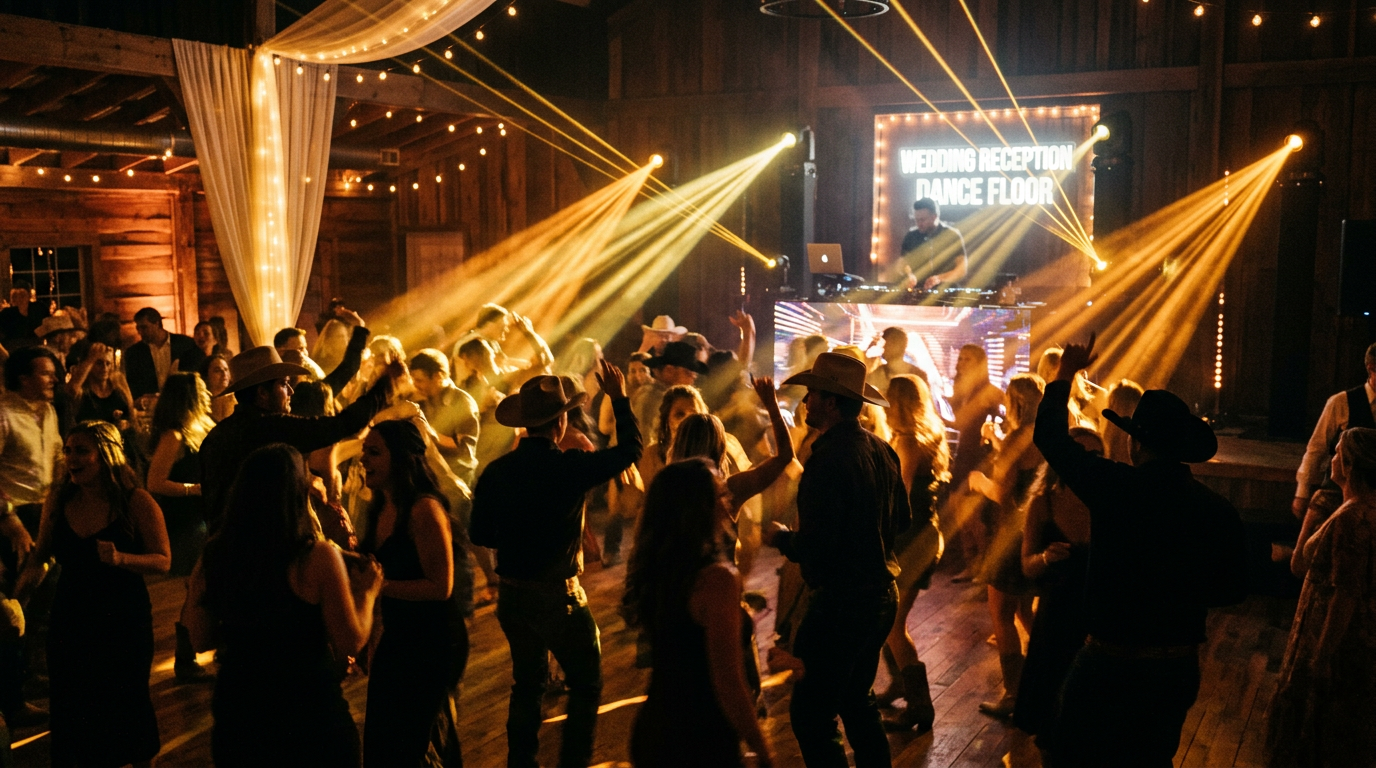
The Art of the Country EDM Transition
There is a massive shift happening right now on the American dance floor. Couples no longer want to choose between the lyricism of Tyler Childers and the kinetic energy of a festival mainstage. They want both. The rise of country EDM, driven by artists like Diplo, Lash, and the legacy of Avicii, has opened up a new playground for wedding entertainment.
However, dropping a heavy house remix of Morgan Wallen immediately after your grandmother finishes her salad is a recipe for dance floor whiplash. A successful wedding is about narrative flow. To make this hybrid genre work, you need a calculated, phase-based music timeline that guides your guests from raw acoustic warmth to late-night electronic energy.
This guide breaks down the exact timeline blueprint required to execute a flawless country EDM wedding, ensuring your older relatives feel welcome early on, while your friends are still talking about the afterparty months later.
Phase One: Ceremony and Cocktail Hour (Acoustic and Organic)
- BPM Range: 80 - 110 beats per minute
- The Vibe: Sun-drenched, rustic, and organic
Your ceremony should remain sacred and personal. Standard acoustic instruments like the fiddle, banjo, and acoustic guitar are nonnegotiable here. The real transition work begins the moment your guests step into the cocktail hour space.
Instead of standard jazz or soft pop, this is your opportunity to introduce "organic house" and acoustic country hybrids. Organic house utilizes natural instruments, hand percussion, and warm basslines. Search for acoustic-leaning electronic tracks or soft, tropical house remixes of classic country tunes. The music should feel like a late afternoon in the Texas hill country, rhythmic enough to encourage a drink in hand, but soft enough to talk over easily.
Phase Two: Dinner (Nostalgia with a Pulse)
- BPM Range: 105 - 118 beats per minute
- The Vibe: Mid-tempo groove and familiar sing-alongs
Dinner is about nostalgia and comfort. Your guests are seated, eating, and catching up. The music should focus on familiar country songwriting from the nineties and early two-thousands, but with a subtle, steady pulse beneath it.
Your DJ should look for mid-tempo edits that replace the standard swing of classic country with a gentle, four-on-the-floor kick drum. This keeps the physical energy of the room elevated even while people are seated. It prepares the subconscious for dancing. Songs by Kacey Musgraves, Shania Twain, and George Strait work beautifully here when blended with light, melodic deep house rhythms.
Phase Three: The Transition Bridge (The Three-Song Pivot)
- BPM Range: 115 - 122 beats per minute
- The Vibe: The ceremonial handoff to the dance floor
This is the most critical fifteen minutes of the night. It happens immediately after the formal dances (First Dance, Father-Daughter, Mother-Son). Once those traditional moments conclude, your DJ must build a bridge from classic country to high-energy dance music.
We utilize a highly effective three-song transition strategy:
- Song One (The Unifier): A massive, universally loved country sing-along that everyone from age eight to eighty knows. Think Garth Brooks or Shania Twain in their original, unedited forms. Pack the floor.
- Song Two (The Mashup): A track that starts as a traditional country song but introduces a steady, modern house beat during the first chorus. This signals to your guests that the tempo is rising.
- Song Three (The Launchpad): A full country house anthem, such as a high-energy remix of Luke Combs or Zach Bryan. By the time the beat drops, your crowd is already moving together.
During this phase, professional DJs like Jordan Miller will often blend live elements, such as a live guitarist performing over electronic decks, to make the transition feel organic rather than jarring. The visual of a live instrument maintains the traditional country aesthetic while the sound system delivers club-level energy.
Phase Four: Late-Night Country EDM Energy (Peak Hour)
- BPM Range: 122 - 128 beats per minute
- The Vibe: Festival mainstage meets Austin honky-tonk
This is where the gloves come off. By 10:00 PM, the older demographic has likely migrated toward the bar or the exit, leaving your core group ready for high-intensity music. This is the hour for pure country EDM energy.
The playlist should feature festival-ready anthems, heavy electronic basslines, and soaring country vocals. Think of mashups that blend modern EDM royalty like Fred again.. or John Summit with the raw, emotional top-lines of Bailey Zimmerman or Chris Stapleton.
To ensure your DJ is on the right track, share this blueprint of proven country house tracks:
- Something in the Orange (Zach Bryan) - Zach Alwin Remix
- Fast Car (Luke Combs) - Dave Aude Remix
- Heartless (Diplo & Morgan Wallen)
- Where the Wild Things Are (Luke Combs) - High-energy house edit
- Wake Me Up (Avicii)
- I Remember (Deadmau5 vs. Kacey Musgraves vocal mashup)
Keeping It Elegant
The secret to executing this hybrid style is restraint. It should never sound like a cheap internet mashup. A professional DJ will focus on high-quality stems, clean transitions, and the right sound reinforcement to ensure the low bass frequencies feel warm rather than abrasive. When done correctly, your wedding will feel modern, cohesive, and entirely unique to your story.
Book Jordan Miller
If you want to bring this precise blend of country warmth and high-energy electronic production to your wedding day, let's talk. You can learn more about booking options, including our signature solo DJ sets and live-instrument hybrid performances, on the Jordan Miller Contact Page. Let's build a timeline your guests will never forget.