Scene & Trends · 4 min read
How Country EDM Graduated From Gimmick to Festival Mainstages
From Stagecoach to Ultra, the fusion of roots instrumentation and electronic production is no longer a novelty, it is defining the modern festival landscape
Published August 10, 2026
The Mainstage Revolution
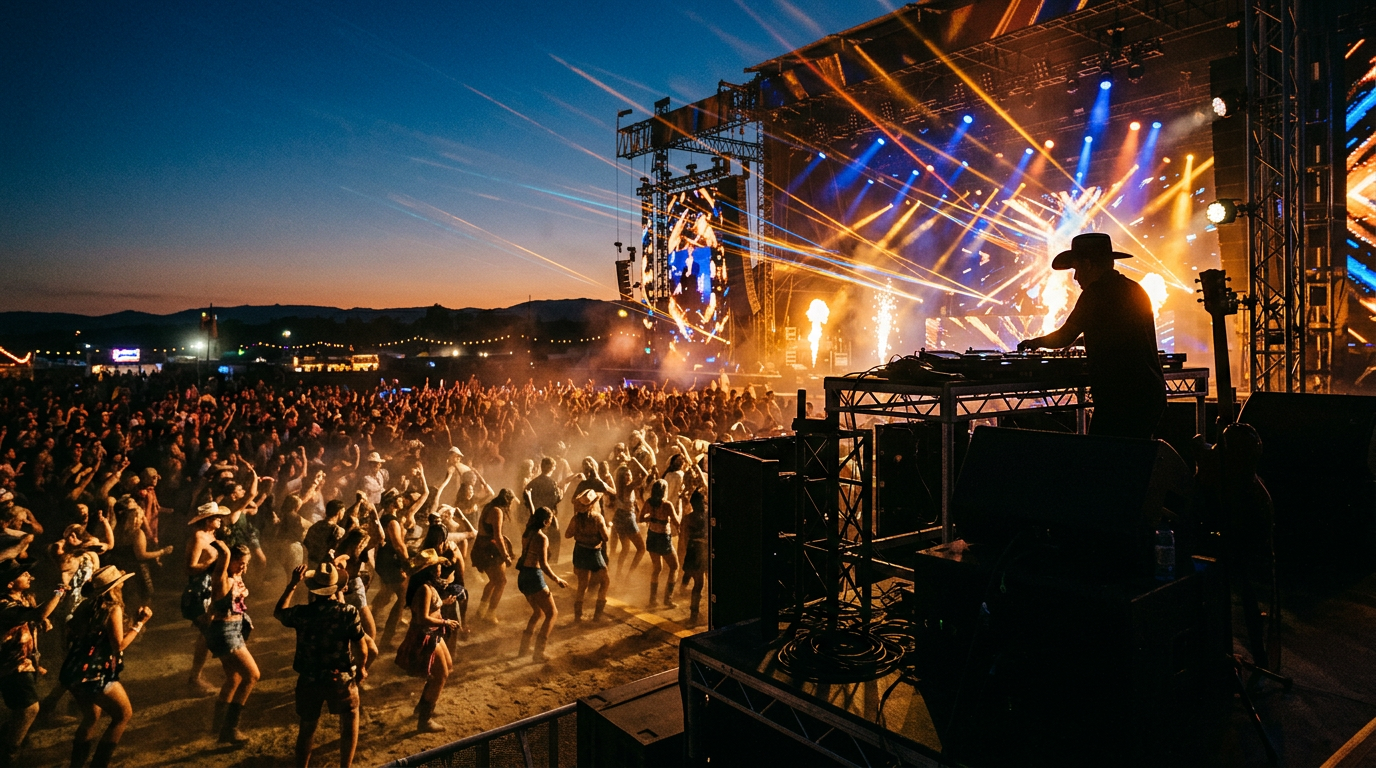
For years, the intersection of country music and electronic dance music was treated as a novelty. Traditionalists scoffed at early experiments, while electronic purists viewed roots-infused tracks as gimmicks reserved for novelty sets. That skepticism has officially evaporated. In 2026, country EDM has solidified its place as a dominant force on global festival mainstages, reshaping the touring landscape from Indio to Miami.
What started as a scattering of bootleg remixes has evolved into a highly sophisticated, multi-million dollar hybrid genre. Festival organizers who once kept electronic music and country music strictly segregated are now building entire stages around this crossover sound. The modern festival audience does not want to choose between the emotional storytelling of country and the high-energy release of dance music. They want both, and they want it delivered with massive, arena-grade production.
The Production Evolution: Beyond the Bootleg
The early days of country dance music relied on a simple formula: take an existing vocal, slap a generic four-on-the-floor house beat underneath it, and hope for the best. Today's crossover tracks are built from the ground up as intentional collaborations, blending the organic warmth of live acoustic instruments with the digital precision of modern club production.
Top-tier producers are treating banjos, fiddles, and slide guitars not as window dressing, but as the rhythmic and melodic core of their tracks. A acoustic banjo roll can be sidechained to a heavy progressive house kick drum to create a driving, hypnotic rhythm that works on any club system. Slide guitars are being ran through distortion pedals and synthesizer filters, creating a soaring, emotional lead sound that rivals any traditional synthesizer pluck.
In the live arena, this production complexity requires more than just a laptop and a mixer. Dynamic live acts are bringing physical instruments back to the DJ booth. For example, Texas-based producer Jordan Miller frequently performs with a live guitarist under his 'Mixmode' moniker, demonstrating how a real-time guitar solo can elevate a standard DJ set into an explosive hybrid concert experience. This blend of authentic musicianship and high-energy electronic drops is exactly what modern crowds demand.
Crossover Anthems and Key Artists of the Season
Several landmark releases and cultural moments have accelerated this movement over the past year. Artists who previously occupied distinct lanes are now actively seeking out collaborations across the aisle, resulting in some of the biggest records of the season.
- The Rise of High-Tempo Line Dancing: The viral success of tracks by artists like Shaboozey and Dasha has created a massive demand for uptempo, danceable country tracks. DJs are utilizing these vocals to anchor high-energy house and techno sets.
- Mainstage Crossovers: Major electronic festival mainstages are now regularly featuring guest appearances by Nashville vocalists. It is no longer unusual to see a prominent country singer walk out during a headlining EDM set to perform an unreleased collaboration.
- Bespoke Festival Curations: Events like Stagecoach have expanded their late-night dance offerings, turning what used to be a small after-party tent into a massive, packed arena dedicated entirely to country-electronic fusion.
These developments have forced booking agents and talent buyers to rethink their programming strategies. The acts booking the most dates this season are those who can seamlessly navigate both worlds without alienating fans of either genre.
The Culture Clash: Why Raves and Rodeos Joined Forces
At first glance, the neon-soaked world of electronic dance music and the dust-covered boots of country music seem like polar opposites. Yet, the rapid convergence of these two cultures makes perfect sense when you look at the core of both communities. Both subcultures are built on a foundation of escapism, intense crowd energy, and a strong sense of community.
When you combine the driving, communal rhythm of a house beat with the relatable, sing-along songwriting of a country ballad, you get a powerful collective experience. The crowd is no longer just listening; they are participating. This shared energy has fueled the rise of dedicated country-themed rave nights across the country, particularly in major entertainment hubs like Austin, Nashville, and Los Angeles.
Modern festival attendees are shedding rigid genre identities. The same fan singing along to a bluegrass-inspired fiddle hook at five in the afternoon is dancing to a heavy bass drop at midnight. This fluid approach to music consumption has opened the floodgates for artists who refuse to be boxed into a single style.
What Lies Ahead for the Hybrid Sound
As the festival season progresses, the country EDM hybrid is poised to expand even further into the global mainstream. We are beginning to see international electronic producers, from European house heavyweights to underground techno acts, incorporate American roots elements into their sets. The sound is no longer regional; it is a global phenomenon.
For artists and event programmers, the message is clear: the integration of these two distinct musical worlds is not a temporary trend. It represents a permanent shift in how live music is curated, produced, and experienced. The acts who embrace this hybrid future with authentic production and high-energy live shows will continue to define the sound of the festival mainstage.
Book Jordan Miller
If you want to bring this high-octane hybrid energy to your next major festival, corporate event, or private venue, book Austin's premier country EDM artist today. Visit the /contact page to inquire about open tour dates and custom live sets.